Cursor Alternatives for API-First Engineering Teams
Summary
Cursor alternatives are getting a second look since SpaceX closed its $60 billion acquisition of Anysphere, Cursor's parent company, on August 14, 2026. This comparison evaluates five real options, Claude Code, GitHub Copilot, Sourcegraph Cody, Cline, and Zed, on the axes that matter for API-first, backend-heavy engineering teams: pricing model, codebase scope, deployment and data control, CI and headless automation fit, and governance controls. Claude Code comes out ahead for teams that want an agent running in CI, not just in an editor.
Cursor alternatives went from a niche search to a recurring one on September 27, 2026, six weeks after SpaceX closed a $60 billion all-stock acquisition of Anysphere, Cursor's parent company. None of the five tools below are a straight swap. For API-first, backend-heavy teams that want an agent to run headless in CI rather than live only in an editor, Claude Code is the strongest fit, with Zed and Cline close behind for teams that want more control over the model.
The vendor-risk question nobody had to ask before August
On August 14, 2026, SpaceX finalized a $60 billion all-stock acquisition of Anysphere, the company behind Cursor. Cursor's roughly 391 million converted shares now sit inside a division rebranded SpaceXAI, alongside access to SpaceX's Colossus supercomputer and an early beta of something called Grok Bot. Bloomberg reported the deal as part of Elon Musk's bid to close ground on Anthropic and OpenAI in coding tools specifically, not just general-purpose models.
That is not automatically a reason to leave. Cursor's product did not get worse overnight. But a platform team that signed a Business or Enterprise contract with Cursor a year ago signed it with a company that set its own roadmap. That company no longer exists as an independent entity. Data handling policy, model routing priorities, and pricing are now set by a division of an aerospace and defense contractor with a very different set of incentives than a 200-person developer tools startup. If your renewal review didn't already have a line item for what happens if our AI coding vendor gets acquired, it does now.
What "alternative" means for an API-first team
Most Cursor alternatives roundups compare autocomplete quality and vibes. That is the wrong axis for a team shipping backend services under an SLO. What we measured instead, across five real options:
Pricing model - seat-based subscription vs. usage-based credits vs. bring-your-own-key
Codebase scope - does it reason across one repo or many, and how well that holds at scale
Deployment and data control - cloud-hosted only, or can you point it at your own model and keep code off a third party's servers
CI / headless automation fit - can it run unattended in a pipeline, or does it need someone at the keyboard
Governance controls - SSO, audit logs, and admin policy maturity for a regulated org
The full breakdown is in the comparison table above. Two patterns stood out once we filled it in.
Claude Code: agentic, terminal-native, built for CI
Claude Code is the only tool here designed from the ground up to run headless: in a GitHub Action, over SSH, or inside a scheduled job, not just inside an IDE window. That matters for backend teams because most AI-assisted work that actually saves time, dependency bumps, log-format migrations, flaky-test triage, looks more like a batch job than a live pairing session.
It has real limits. There is no keystroke-level inline autocomplete the way Cursor's Tab completion works, and it is Claude-only, so a team standardized on a different model vendor for compliance reasons will hit a wall. But for the specific job of delegating a multi-file refactor and reviewing the diff afterward instead of approving every line, it is the closest thing to a CI-native workflow on this list, which is why it is the pick here for API-first, backend-heavy teams.
Zed and Cline: two ways to avoid lock-in
Zed and Cline solve the same problem from different directions. Zed is a from-scratch Rust editor that renders agent edits at native speed and connects to any agent over its own open protocol, ACP, Claude Agent, Codex CLI, Gemini CLI, whatever your team standardizes on next year. Cline is a free, open-source VS Code extension with the same idea: you bring an API key from 30-plus providers, and its Plan/Act mode makes the agent propose a change before it executes it.
That Plan/Act split is worth calling out on its own. It is the same instinct behind an SLO-gated rollout: do not let the automated thing touch your codebase until a human has looked at the blast radius. Neither Zed nor Cline has enterprise SSO yet, which will rule them out for some regulated orgs today. For everyone else, they are the two lowest-lock-in options on this list.
GitHub Copilot and Cody: governance-first picks
If your team already lives inside GitHub Issues, Actions, and PR review, Copilot's coding agent can pick up an issue and open a draft PR without leaving that workflow, and its Enterprise tier ships the audit logs and model-access policies a security team will ask for. The tradeoff since June 2026 is usage-based AI Credits billing, which gets expensive fast under heavy agent use, and independent benchmarks still put its chat quality behind Cursor-style agents on large multi-file refactors specifically.
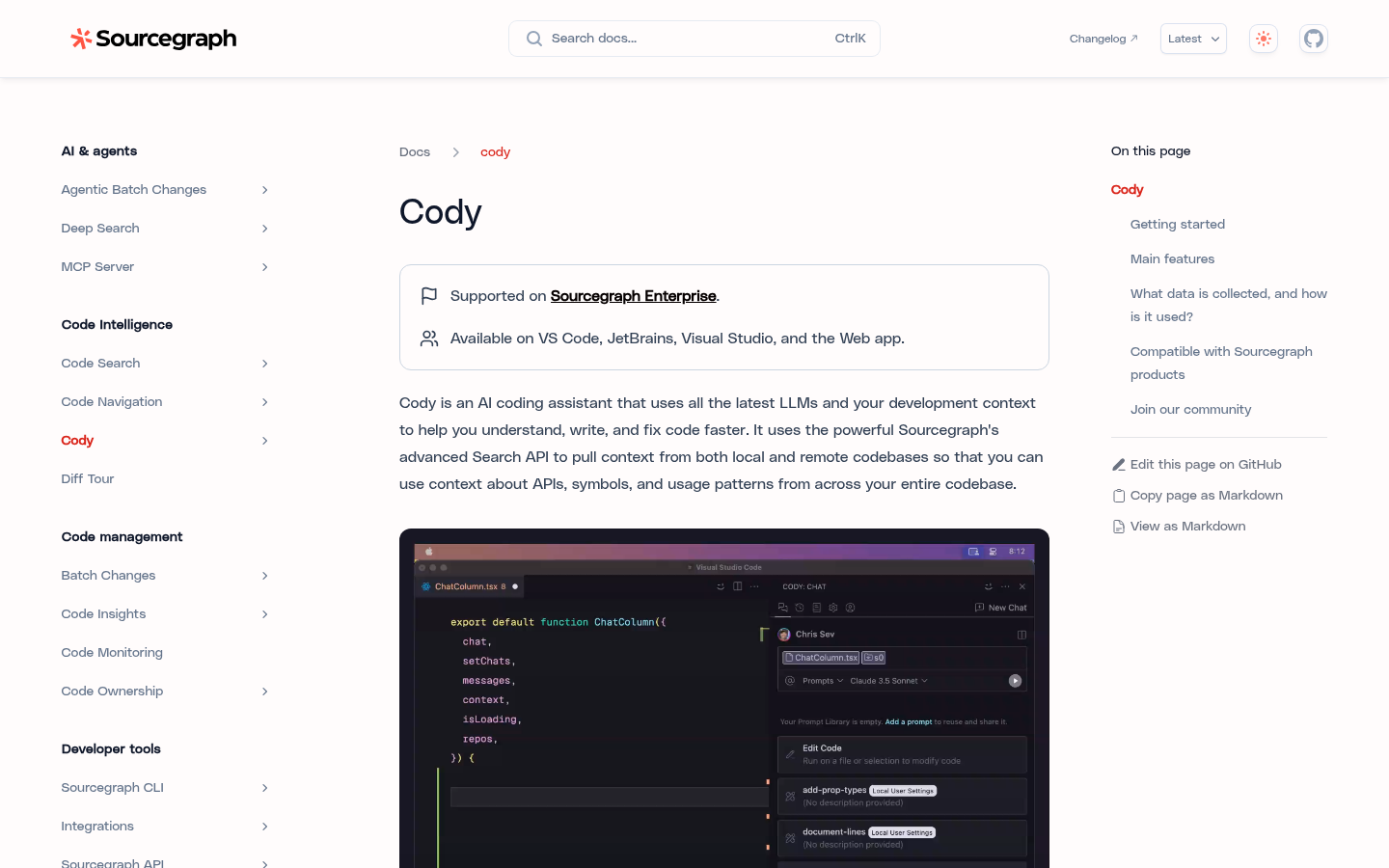
Sourcegraph Cody plays a different game entirely: it is not really competing on autocomplete, it is competing on finding things across ten repositories at once. That is the right tool when the problem is which of our forty services still calls this deprecated endpoint, not help me write this function. It is also enterprise-only since mid-2025, with contracts starting in five figures a year, so it is not a fit for a five-person team.
Where Cursor still wins
None of these five beat Cursor on raw in-editor experience. Multi-model routing across Claude, GPT, Gemini, and Grok inside one interface, up to eight parallel agent sessions each in its own git worktree, and Bugbot catching logic errors in a PR before a human does, that is still a genuinely strong package, and independent benchmarks still show Cursor ahead of Copilot on large multi-file refactors specifically. If your team already has a working setup and no specific governance or CI-automation gap, the acquisition alone is not a reason to migrate today. It is a reason to ask legal and security what SpaceXAI's data processing terms actually say, and to have a real alternative already picked out before you need one.
The tools converge on capability faster than any of us can benchmark them. The question worth revisiting every renewal cycle is not which one writes the best code today, it is who owns the company writing it, and what happens to your workflow the day that changes again.
At-a-glance
| Claude Code | GitHub Copilot | Zed | Cline | Sourcegraph Cody | |
|---|---|---|---|---|---|
| Pricing model | From $17/mo (Claude Pro, annual) up to $200/mo (Max 20x); pay-as-you-go API also available | Free tier; Pro $10/mo; Business $19/user/mo; Enterprise $39/user/mo | Personal free forever; Pro $10/mo; Business $30/seat/mo | Free and open source; bring your own API key ($5-50+/mo typical spend) | Enterprise-only since mid-2025; contracts typically start in five figures per year |
| Codebase scope | Strong whole-repo awareness, tuned for large multi-file backend refactors | Repo-aware chat and agent; codebase indexing on Enterprise tier | Repo-aware; scope depends on the external agent connected via ACP | Reads the whole open codebase; depends on the model you connect | Cross-repo: reasons across up to 10 repositories at once |
| Deployment & data control | Terminal, desktop, web, or IDE plugin; Claude API/Console billing available | Cloud SaaS; org-wide model and data policy controls on Business/Enterprise | Local editor; can run fully on your own API keys or local models via Ollama | Local VS Code extension; runs on any model provider you configure, including local models | Cloud SaaS via Sourcegraph platform; enterprise data controls |
| CI / headless automation | Built for it: runs headless in GitHub Actions, SSH sessions, and scheduled jobs | Coding agent can pick up an issue and open a draft PR unattended | Depends on the connected agent's own CI support via ACP; Zed itself is interactive | Can run agent tasks via CLI/automation, but built primarily as an interactive VS Code extension | Batch changes across repos, but oriented around interactive code search and review |
| Governance & admin controls | Org controls via Claude Console/Enterprise; no dedicated SSO within Claude Code itself | Org-wide policy controls, audit logs, and model governance on Business/Enterprise | Org-wide AI policy and data controls on Business; SSO/SAML/SCIM planned but not shipped | Team tier exists, but governance tooling is younger than enterprise-first competitors | SSO, audit logs, and admin controls built for large regulated orgs |
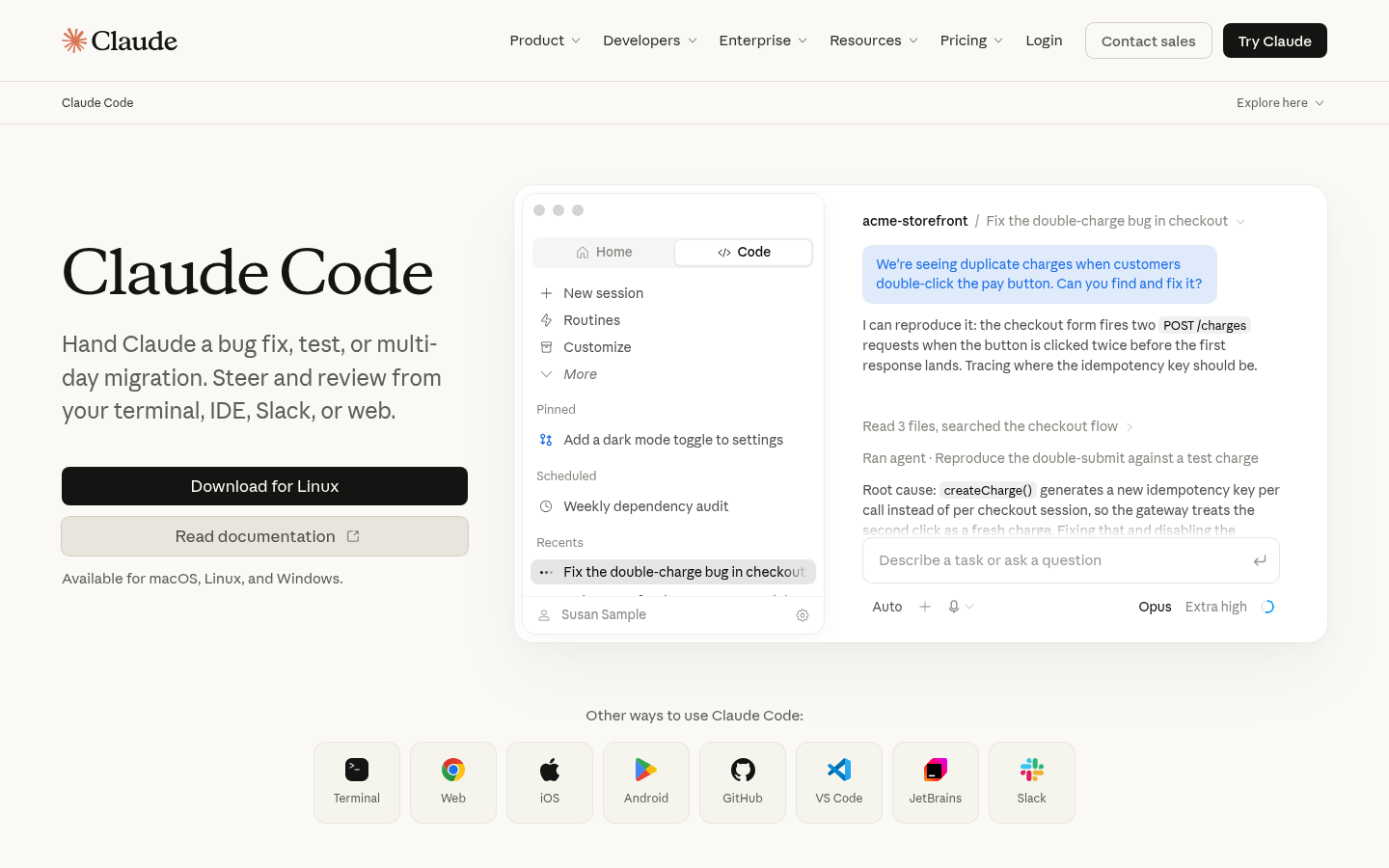

Claude Code
- Fully agentic terminal-native workflow: reads, edits, runs tests, and iterates with minimal hand-holding
- Runs headless in CI pipelines, GitHub Actions, and remote SSH sessions, fitting an automation-first workflow
- Strong whole-repo awareness across large, multi-service backend codebases
- First-party Model Context Protocol support for wiring in internal tools
- Claude models only, no multi-provider routing if your org standardizes on another vendor
- No dedicated keystroke-level inline autocomplete; built for task delegation, not typing assistance
- Heavy agentic use on pay-as-you-go API billing can get expensive without usage discipline
The closest fit to a CI-native, review-before-merge workflow instead of a keystroke-level IDE companion.
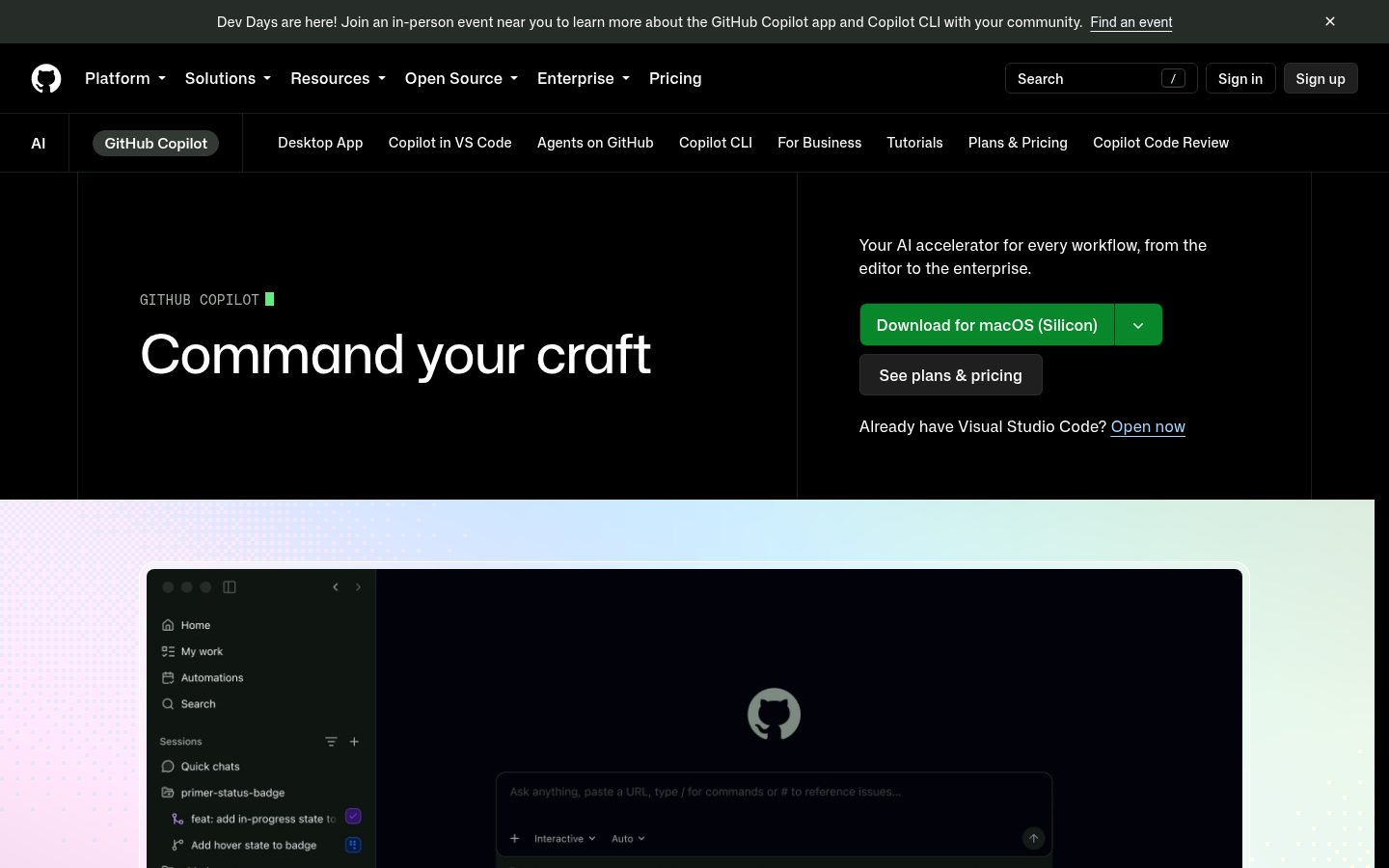
GitHub Copilot
- Deepest native integration with GitHub itself: PRs, Issues, Actions, and review live in one place
- Copilot Workspace and coding agent can pick up an issue and open a draft PR unattended
- Works across VS Code, JetBrains, Neovim, and github.com without switching editors
- Org-wide policy controls, audit logs, and model governance built for regulated environments
- Moved to usage-based AI Credits billing in June 2026; heavy agent use burns through included credits fast
- Chat quality trails Cursor-style agents on large multi-file refactors in independent benchmarks
- Business and Enterprise tiers add real per-seat cost once a team scales past a handful of engineers
Makes sense if governance and a GitHub-native workflow matter more than raw agent quality.
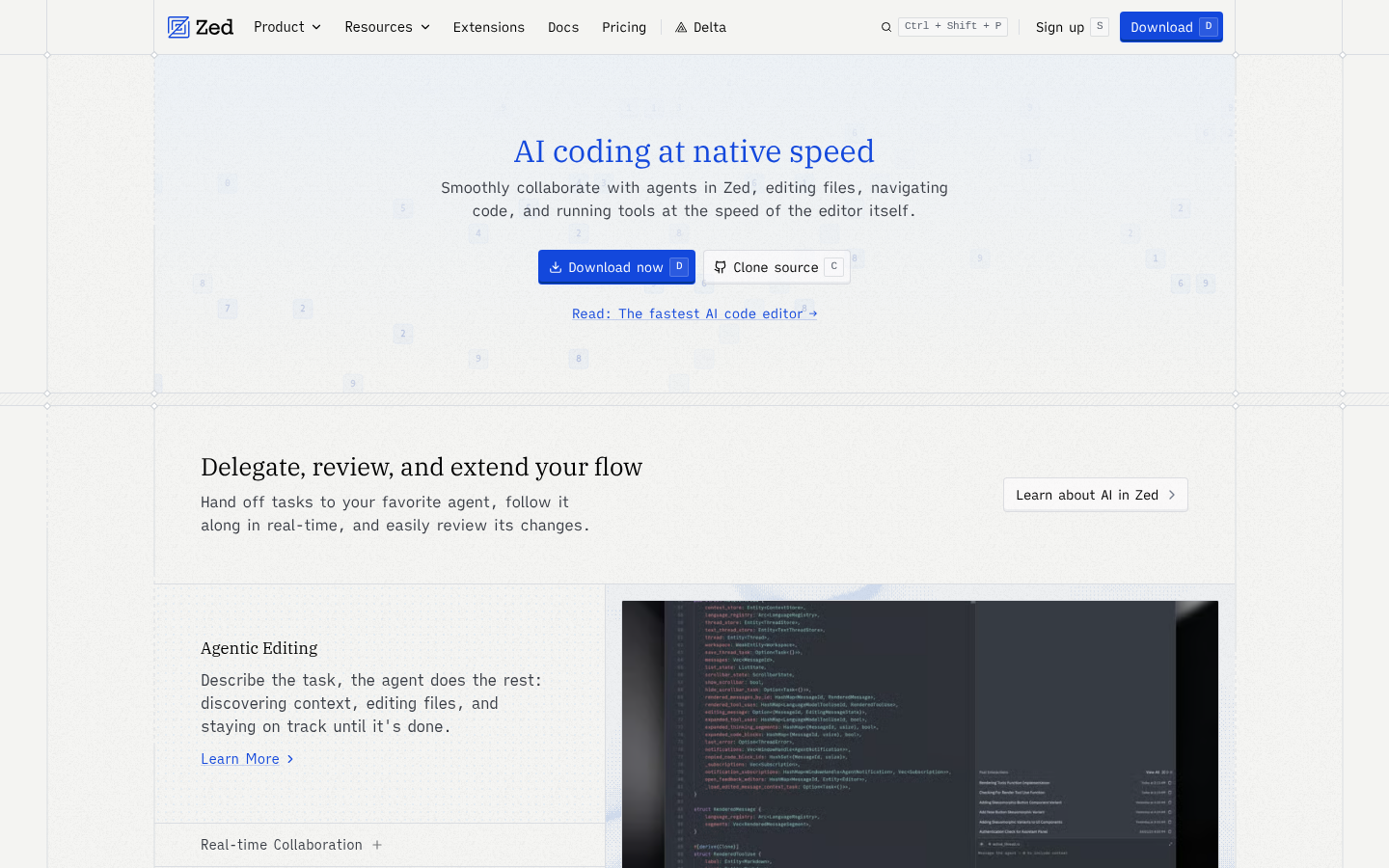

Zed
- Written from scratch in Rust: GPU-rendered UI keeps a 50-file agent edit visible at native editor speed
- Open protocol (ACP) lets you bring Claude Agent, Codex CLI, or Gemini CLI instead of one vendor's model
- Fully open source, including the Zeta edit-prediction model and the ACP protocol itself
- Can run entirely on your own API keys or local models via Ollama, with AI fully optional
- No SSO, SAML, or SCIM yet, a real gap for larger regulated engineering orgs evaluating it today
- Younger AI agent ecosystem than Copilot or Cursor, with fewer third-party integrations out of the box
Best pick if editor performance and model neutrality matter more than a polished all-in-one agent package.
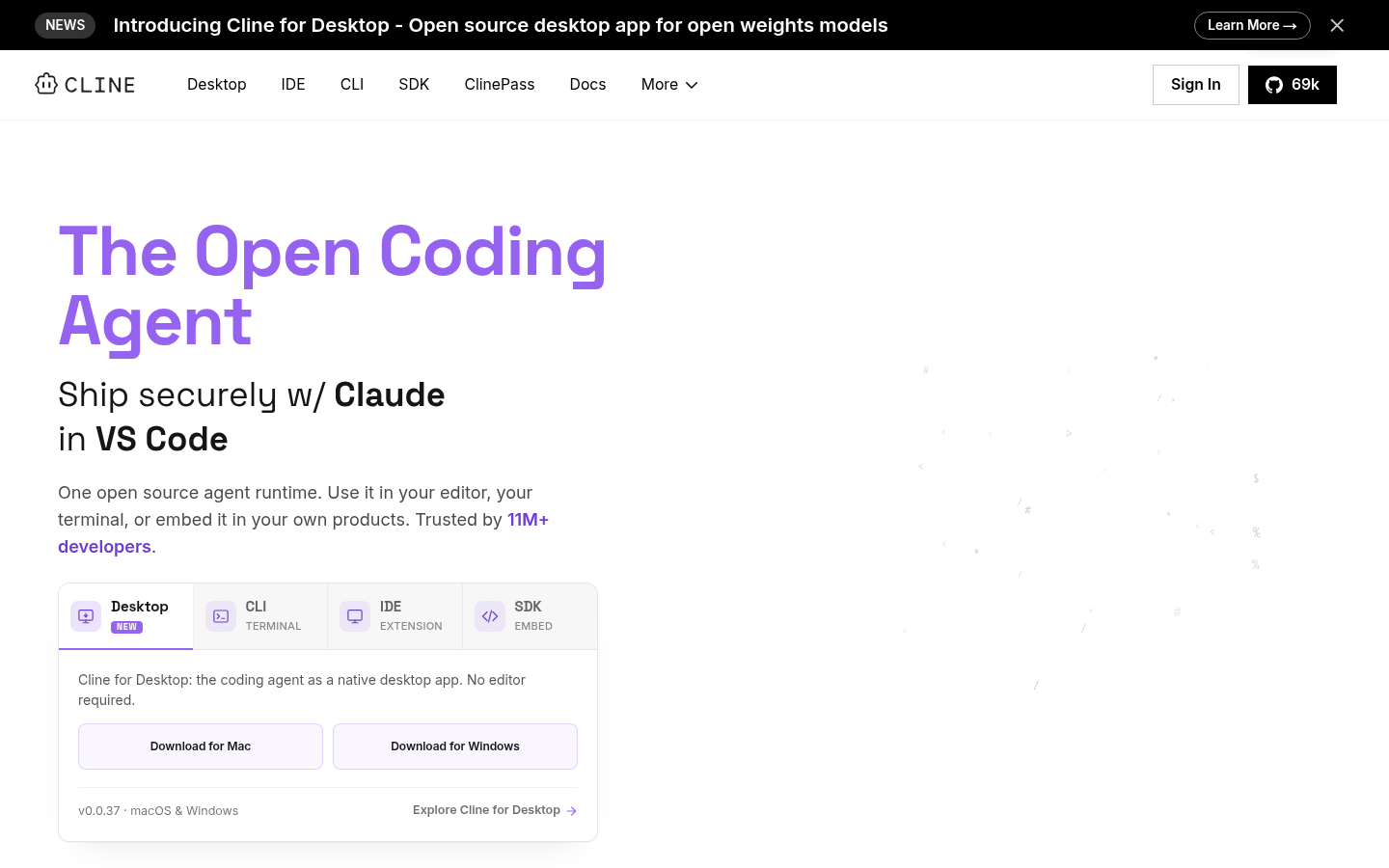
Cline
- Free and open source; you bring your own API key across 30+ model providers
- Plan/Act mode separates proposing a change from executing it, so nothing lands without review
- Reads the whole codebase, edits files, runs terminal commands, and can drive a browser to check its own work
- Model Context Protocol support lets you wire in custom tools beyond the defaults
- Agent runs can rack up API spend fast on a large task if left unsupervised
- Younger governance and admin tooling than the enterprise-first competitors
The pick for engineers who want to see and control exactly what the agent does and pay only for tokens used.
Sourcegraph Cody
- Retrieves relevant code from up to 10 repositories at once, reasoning across whole systems, not one repo
- Built on Sourcegraph's code-search platform: batch changes, code insights, precise cross-repo navigation
- SSO, audit logs, and admin controls designed for large regulated engineering orgs
- No individual or small-team plan since mid-2025; indie developers and small teams are priced out entirely
- Setup and onboarding are heavier than a plug-in-and-go extension, with enterprise contracts starting in five figures annually
Overkill for a single service, but hard to beat if the problem is finding things across dozens of repos.
Verdict
None of these five tools beat Cursor on raw in-editor polish. What changed is who owns Cursor: SpaceXAI now controls its roadmap, data handling, and pricing. If your team can accept that, keep using it. If backend-heavy, CI-driven work and vendor-risk review matter more than keystroke-level autocomplete, Claude Code and Zed give you agentic workflows without a rocket company setting the roadmap, and Cline gives you the same for free if you bring your own API key.
How we tested
We compared each tool against Cursor on five axes platform teams actually gate renewals on: pricing model, codebase scope, deployment and data control, fit for headless CI automation, and governance controls (SSO, audit logs, admin policy). Pricing and feature claims are sourced from each vendor's own pricing and product pages, checked on September 27-28, 2026, six weeks after SpaceX's August 14 close of its $60 billion all-stock acquisition of Anysphere, Cursor's parent company. We did not run our own head-to-head coding benchmark suite; third-party benchmark claims cited below (for example on multi-file refactor quality) are attributed to their source rather than presented as our own measurement.