AI Pair Programming Is Fast. Shipping It Safely Is Next.
AI pair programming gets code written sooner. upstreamapi helps you release that code with progressive rollouts, feature flags and automatic rollback on SLO.
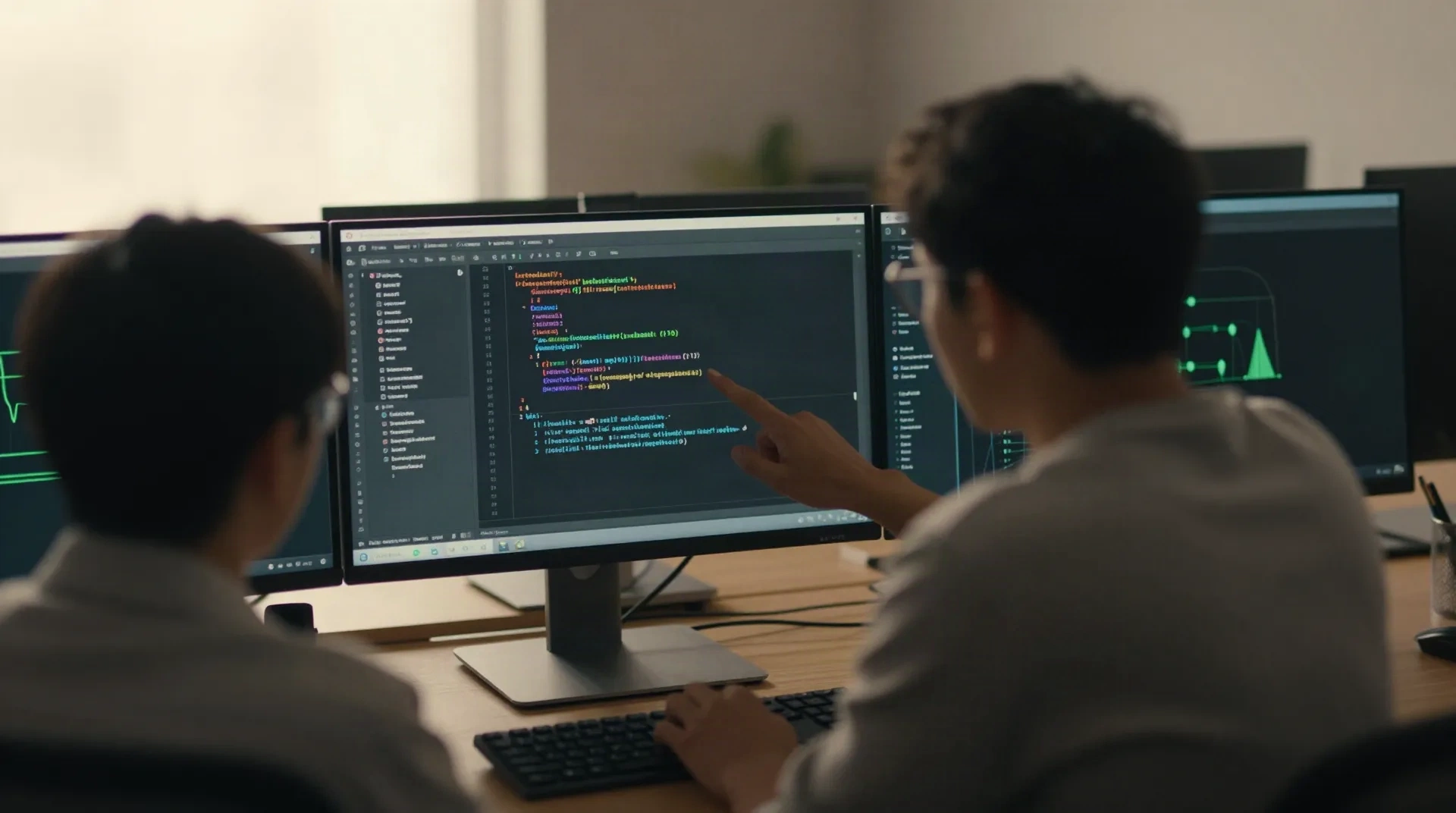
Why teams pair with an AI assistant
The intent behind the search is rarely curiosity. Engineers want specific things out of the editor, and each one has a downstream cost.
First drafts in seconds
Boilerplate, handlers, migrations and tests appear as a starting point, so the engineer spends time on the logic that is actually hard.
A second opinion on demand
Ask why a function behaves a certain way, or what a refactor might break. Useful, as long as the answer is checked against the code.
Tests written alongside code
An assistant can sketch cases you would have skipped on a Friday afternoon. You still decide which assertions matter.
Faster onboarding to old code
Unfamiliar services become readable sooner when you can ask questions of the codebase instead of hunting for the one person who knows.
Less context switching
Docs, snippets and answers arrive in the editor. Fewer tabs, fewer interruptions, a tighter loop between idea and running code.
More changes per engineer
This is the side effect nobody budgets for. More merged changes per week means more releases that need a safe path to production.
More code, same release process
When code arrives faster, the bottleneck moves. Review, release and watching the dashboard do not get faster just because the first draft did. Teams that pair with an AI assistant often find the queue forming after the merge: a release that needs a person, a deploy that is all or nothing, a revert that is done by hand. The fix is not slowing the assistant down. It is making each release small, observable and reversible, so a higher volume of changes does not mean a higher volume of incidents.
- Deploying to 100% of traffic at once turns every bug into an incident
- Generated code can hide assumptions about load, data shape or ordering
- A manual revert depends on someone noticing, then acting, at the worst hour
- Review catches what is in the diff, not what happens under production traffic

A safer path for AI-written code
Four stages. The assistant owns the first one at most. The rest is delivery.
-
1
Write and review
Pair with your assistant, then review the change like any other pull request. Tests pass, a human approves, the change merges.
-
2
Simulate the rollout
Before exposing anything, model how the progressive rollout and its traffic impact would play out, so the plan is checked on paper first.
-
3
Expose it gradually
Ship behind a feature flag and widen exposure in steps. A small share of traffic sees the change before everyone does.
-
4
Let the SLO decide
If your error or latency objective is breached during the rollout, the pilot reverts automatically. No pager needed to start the revert.
Delivery controls, not a code assistant
upstreamapi starts where your assistant stops. It does not write code and it does not review it. It governs how changes reach users.
Progressive rollouts
Release to a growing share of traffic in stages, instead of a single switch from zero to everyone.
Feature flags
Merge generated code dark, then turn it on for a segment and off again in seconds, without redeploying.
Auto-rollback on SLO
Define the objective that matters. When a rollout pushes it past the limit, the change reverts on its own.
Rollout simulation
Test the progressive plan and its likely traffic impact before the change meets a real user.
Independent of your editor
It only sees what you ship, so it works the same whichever assistant wrote the first draft.
Quieter on-call
A bad release that reverts itself is a log entry the next morning, not a page at 3am.
When the SLO trips, the rollout reverts
Picture a generated change that passed review and every unit test. It reaches a small slice of traffic and the error rate starts to climb. With a manual process, someone has to see the alert, find the release, decide, and revert by hand. With an SLO gate, the rollout steps back as soon as the objective is crossed, and the blast radius stays at the small slice it started with. The post-mortem then has a short, readable timeline instead of a long one.
- Blast radius capped by the stage the rollout had reached
- Revert triggered by the metric, not by who happened to be watching
- Flags allow a targeted off-switch when a full revert is not needed

Assistant or rollout layer: different jobs
These are complementary. Most teams that pair with an AI assistant need both, at different points of the pipeline.
| Question | AI coding assistant | upstreamapi |
|---|---|---|
| Main job | Helps you write and understand code | Controls how changes reach users |
| When it acts | Before the merge, in the editor | After the merge, during the release |
| Writes your code | Yes, as suggestions you review | No |
| Limits blast radius | No | Yes, through staged exposure and flags |
| Reverts a bad release | No | Automatically, on an SLO breach |
| Where it is stronger | Speed of the first draft | Safety of the last mile |
AI pair programming and safe releases
What is AI pair programming?
Does AI pair programming make teams ship faster?
Is AI-generated code riskier in production?
Is upstreamapi an AI coding assistant?
How does a feature flag help with generated code?
What does auto-rollback on an SLO actually do?
Do I need to change my AI coding tools to use it?
Ship your AI-written code with a safety net
Keep pairing with your assistant. Add progressive rollouts, feature flags and SLO-based auto-rollback for the part that reaches users.